narayan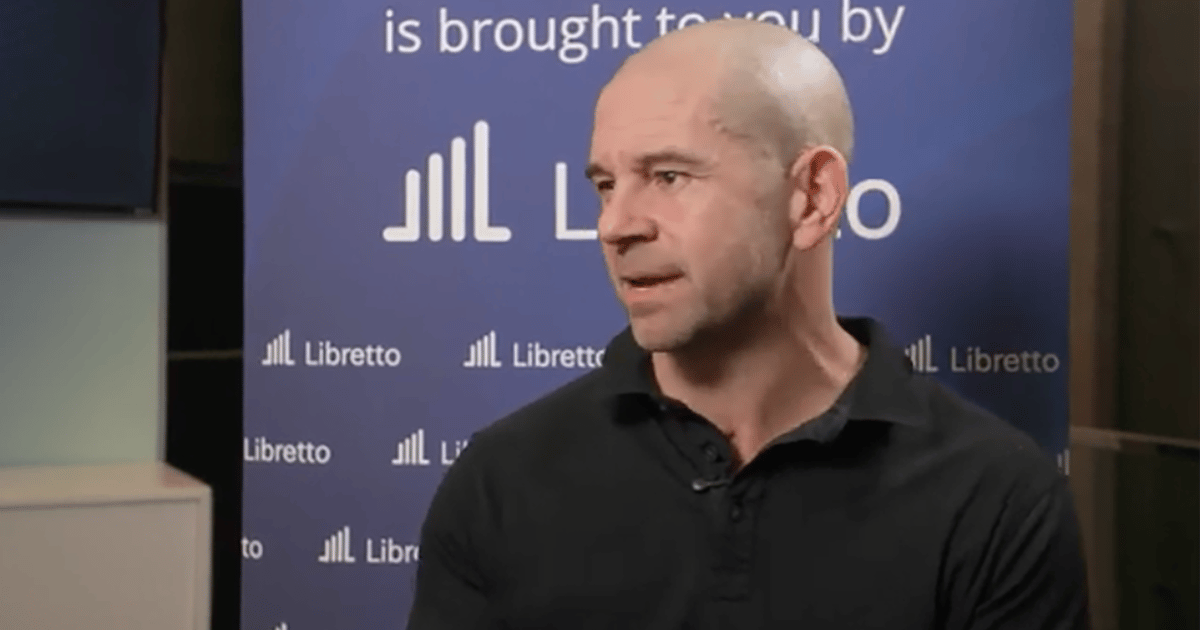
Kirk McKeown, co-founder and CEO of Carbon Arc, breaks down why data, not just AI models, will determine the next wave of innovation in wealth management.
As firms race to adopt AI, the real challenge lies in making data accessible, structured and usable across organizations. He also discusses the rise of the model-driven economy, the growing importance of real-time data, and the risks of data decay, along with a broader push toward democratizing access to institutional-quality data.
Read the full raw transcript below:
Shannon Rosic: Data continues to be a four-letter word in wealth management. To break down the latest trends, I’m joined by Kirk McKeown, co-founder and CEO of Carbon Arc. Kirk, thank you so much for joining me.
Kirk McKeown: Thank you for having me.
SR: I’ve been looking forward to chatting with you because you are a bit newer to the wealth management space, but you are doing some really interesting things with your new company, Carbon Arc. Tell me a little bit about not only the name and where that all derived from, but what you’re working on right now. And again, I mentioned data, so let’s talk about what you’re seeing there.
KM: Sure. If you look back over the last 150 years, every major technology transformation has seen an equal transformation in its underlying feedstock. During the industrial age, you saw the world go from kerosene to electricity. During the mobility age, you went from horses to oil. Now, as we see models proliferate in the automation of knowledge, data and data structure need to follow the same path, and that’s what we believe at Carbon Arc.
In order for data to follow that same path, you need to remove all of the friction from the data buying, the data transaction, and the data consumption process. You need to get legal and compliance to the right place, pricing to the right place, and usability to the right place. So we’ve built a platform to do that.
SR: How long have you been working on this?
KM: We’ve been at it for about 5 years. I spent 20 years on Wall Street building research systems and working in data. Where we think the long pole in the tent with the AI economy is data structure. Everybody’s been focused on models—we all know about perplexity, OpenAI, and Anthropic. People have been talking about data centers, chips, and the grid.
There’s models, chips, and then there’s data structure. Up to this point, most of the data that you’ve seen training models and showing up in models has been scraped off the web. We are attacking the problem where there is data sitting in every company in the world—on balance sheets, maybe being consumed internally, but not being transacted and monetized in the world.
For example, there is restaurant data that exists that would be really helpful for a credit card company to understand. There is credit card data that would be helpful for a healthcare services provider to understand. But there’s no functional way for it to transfer in a safe space that is liquid, easy, and transparent.
SR: This is your first time at T3. Obviously, there are a ton of bright tech minds here. Tell me a little bit about what you’ll be talking about on stage and the main points for folks to know.
KM: The main points really are, I’m going to talk a little bit about why I’m here. I’m new to the community, getting up on stage—who’s the guy with the Boston accent and the shaved head? It’ll be a little bit about the journey because the journey matters.
Data is actually the tech stack for moving big quantities of data. The technology to turn it into synthesis is all very new. Where we were before really matters when thinking about where we’re going.
There will be a lot of conversation around the history of data on Wall Street as a corollary for the history of the future of data on Main Street. That’s one part of it. Another part is really just talking about the functionality of models in a model-driven world.
A model-driven economy is very different from the traditional software economy we’ve been seeing. We’re starting to see that manifest in some of the market caps of software companies, and people are starting to light up about the changing way things work. In model-driven companies, the only thing that separates one model from another is lift. They compete on that competitive advantage—that tiny improvement that comes from better questions, better modeling, and better data structure.
We’re going to talk about changing economic cycles, data structure problems, and some potential solutions.
SR: I hear this term more and more now around data decay. What trends do you see within financial services and beyond as it pertains to data decay and AI?
KM: There are different ways that models engage with data. There’s training data, which trains the model to understand patterns and relationships, usually in words. For example, LLMs have trained on text.
Data decay really comes down to being able to continually refresh your model so that it is timely and up to date. That lives in a more real-time space, which requires data to be constantly updated and refreshed. This means pipelines and a markets-based approach need to be continually engaged and navigated.
That’s what we’re doing. Fundamentally, we update our data stack daily. We work with everybody—from Wall Street folks to consulting firms, enterprises, and retail traders.
SR: What’s your view on access to real-time data? We are very much in an information era where we are constantly being fed data points and information. It can be a lot to keep up with. How are you approaching that and staying on top of it with accessibility to it all?
KM: The way we stay on top of it is by building a platform that brings in the data and structures it against how the world works. Fundamentally, whether you’re modeling McDonald’s or Macy’s, those are both consumer businesses tackling share of attention and share of wallet problems.
While they are attacking the same problem statements, they sell very different products and might have different consumers. But the problem statements are similar, so you can build tools into constantly updating and refreshing.
The key in the information overload is to understand what’s important and what isn’t. As models proliferate as an application layer between data and everyone, we think it’s important to create sovereignty at the individual level. This allows people to create their own filters, see what they want to see, and work on what they want to work on.
The most dangerous thing I’m seeing as models layer the world is that we are putting a lot of trust into the folks building those big models as the arbiters of what we see and don’t see. This has already been an issue with Google Search and other things over time. By creating a markets-based approach to access to data, the idea is to put power back into the decision-makers.
SR: For folks who may not be as familiar with Carbon Arc, can you provide a high-level overview of who you serve, who is best suited to work with you, and your mission?
KM: Our mission is to democratize access to data structure for anyone who wants it. We work with suppliers—folks who sell their data. This includes everyone from people flying drones to satellite companies, credit card companies, payroll businesses, and healthcare claims.
We don’t move anyone’s personal information. We believe there’s a lot of information to be had when the number is big enough and a cohort-level understanding.
We sell into enterprises as well as retail traders. We just launched a retail product where you can get access to all the data that the biggest funds in the world are making decisions with for $20 a month.
Our customers include the biggest consulting firms, banks on Wall Street, large hedge funds, global enterprises, sovereign wealth funds—anyone trying to make decisions using data. Fundamentally, you can do all the research in the world and use all the models you want, but you still have to make a decision.
SR: Well, love seeing you now on the wealth management scene. Hope to certainly see more of you, Kirk. Thank you so much for your insights.
KM: Thanks for having me. Absolutely appreciate it.

 admin
admin