admin
admin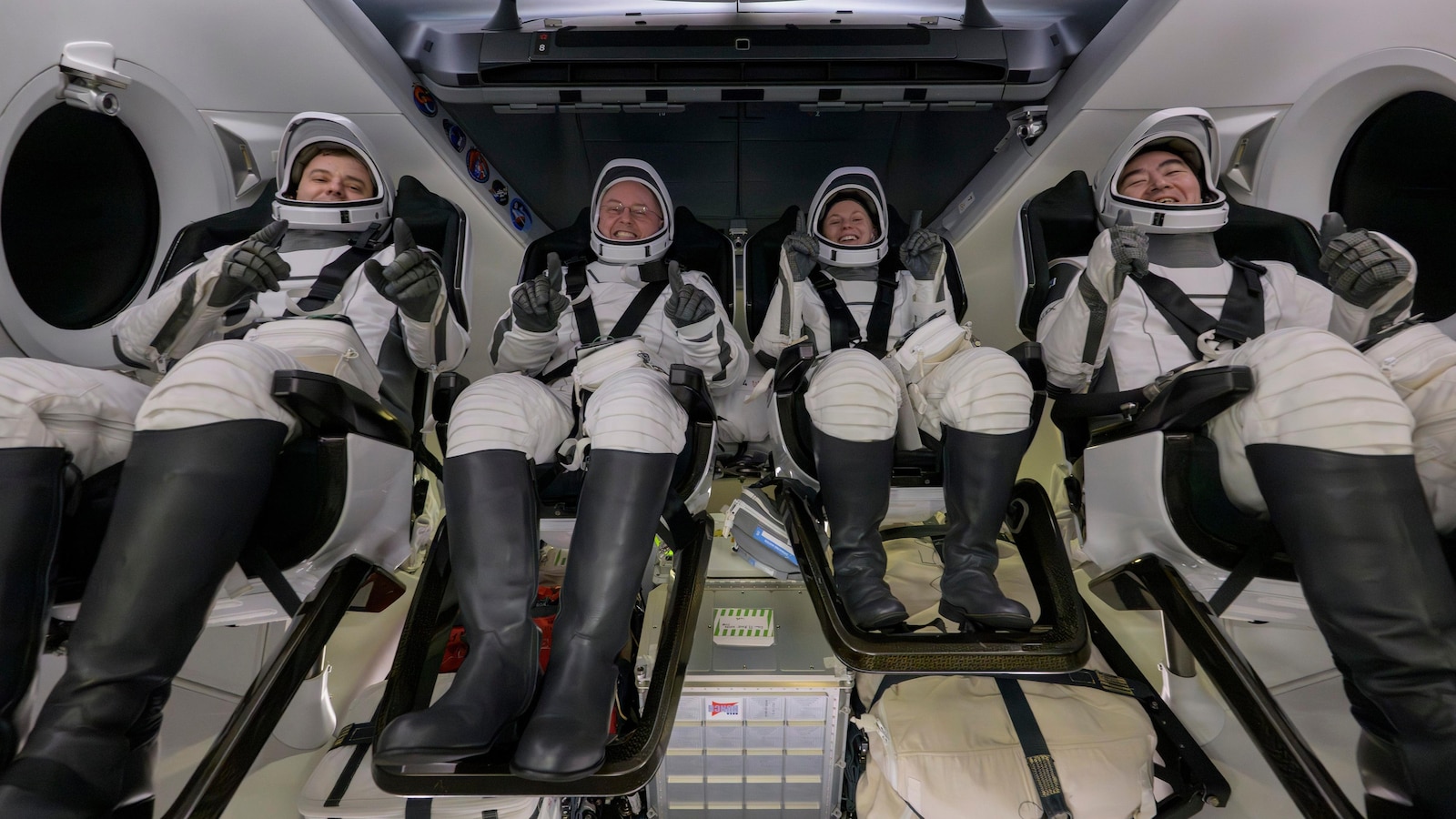
CAPE CANAVERAL, Fla. — The astronauts evacuated last week from the International Space Station say a portable ultrasound machine came in “super handy” during the medical crisis.
During their first public appearance since returning to Earth, the four astronauts refused Wednesday to say which one of them needed medical attention and for what reason. It was NASA’s first medical evacuation in 65 years of human spaceflight.
NASA’s Mike Fincke said the crew used the onboard ultrasound machine once the medical problem arose Jan. 7, the day before a planned spacewalk that was abruptly canceled. The astronauts had already used the device a lot for routine checks of their body changes while living in weightlessness, “so when we had this emergency, the ultrasound machine came in super handy.”
It was so useful that Fincke said there should be one on all future spaceflights. “It really helped,” he said.
“Of course, we didn’t have other big machines that we have here on planet Earth,” he added. “We do try to make sure that everybody before we fly are really, really not prone to surprises. But sometimes things happen and surprises happen, and the team was ready … preparation was super important.”
The space station is set up as well as it can be for medical emergencies, said NASA’s Zena Cardman, who commanded the crew’s early return flight with SpaceX. She said NASA “made all the right decisions” in canceling the spacewalk, which would have been her first, and prioritizing the crew’s well-being.
Japanese astronaut Kimiya Yui said he was surprised how well all the preflight training paid off in dealing with the health concerns.
“We can handle any kind of difficult situation,” Yui said. “This is actually very, very good experience for the future of human spaceflight.”
Joining them on what turned out to be a 5 1/2-month mission — more than a month shorter than planned — was Russia’s Oleg Platonov. They launched last August from Florida and splashed down in the Pacific off the San Diego coast last week.
Welcoming them back to Houston were their replacements, who aren’t due to launch until mid-February. NASA and SpaceX are working to move up the flight.
“We were hoping to give them hugs in space, but we gave them hugs on Earth,” Fincke said.
___
The Associated Press Health and Science Department receives support from the Howard Hughes Medical Institute’s Department of Science Education and the Robert Wood Johnson Foundation. The AP is solely responsible for all content.