
AI Reshapes Wealth Management With New Tools and Insights
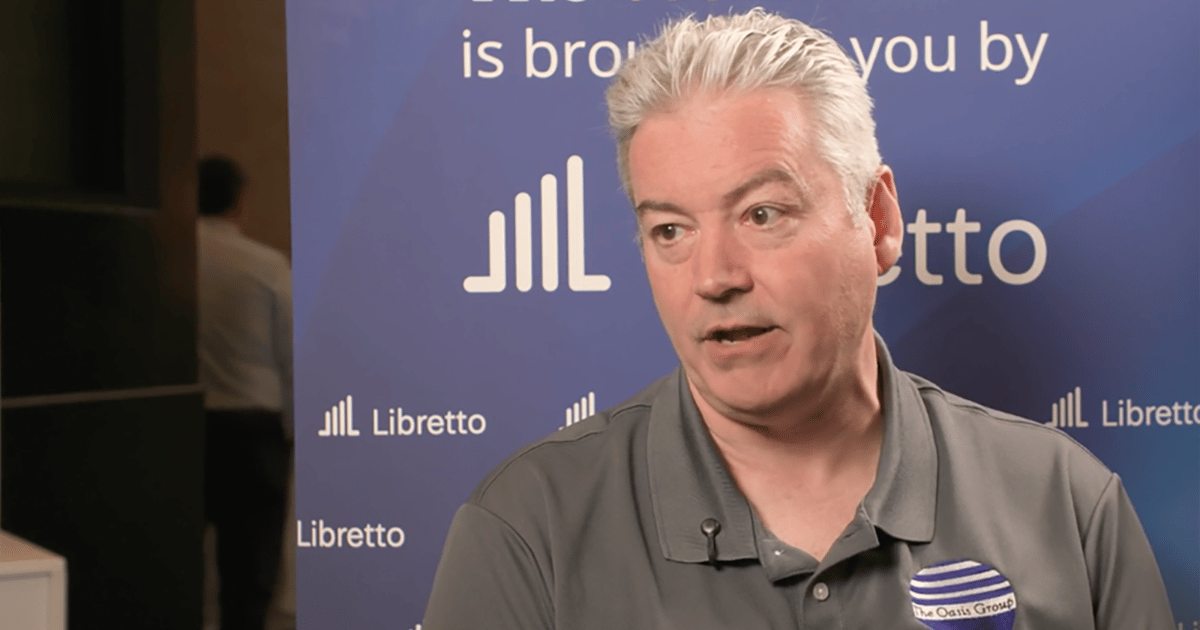
The Oasis Group’s John O’Connell shares why wealth management is entering a new phase of AI adoption, moving from experimentation to full-scale implementation.
He outlines how firms can assess their position on the AI maturity curve, build governance frameworks, and identify use cases that drive real business impact. He also explains how AI will reshape the middle and back office, why the advisor-client relationship will remain central, and what firms must do now to stay competitive in a rapidly evolving landscape.
Read the full raw transcript below:
Shannon Rosic: I’m joined by one of the leading voices in wealth management right now, especially around AI, John O’Connell, founder and CEO of the Oasis Group. John, thanks so much for joining me.
John O’Connell: Thank you very much for having me, Shannon.
SR: So I always love our conversations because I get to get under the hood with you and talk about the deeper stuff when it comes to our industry. So let’s start with the obvious. AI obviously continuing to dominate the headlines, but what are you seeing right now in terms of our space and what can we expect maybe in the future?
JC: So I, I spoke at AI University this week, which is really, really cool. I think what we’re seeing at this point is this is, this is the biggest transformational, uh, movement that we’re gonna be seeing probably in my entire lifetime, uh, with artificial intelligence and coming about. So, you know, I’m a, I’m a big history buff. I graduated during the first AI winter. I’ve been seeing, you know, we’ve had two AI winners. The big difference now is we have the computing power, we have the training data that this is going to be transformational. So everything that you see from the advisor relationship all the way back is really gonna transform in the wealth management space. The advisor relationship, I don’t think is gonna change a lot, but that middle and back office is gonna change significantly. In fact, even advisors that are focused primarily on, let’s say, investment management are really gonna wind up shifting more towards behavioral finance and relationship management away from investment management because the computing power is there that a lot of investments are gonna happenretty much on their own, I mean, in a lot of cases, or with a very small support staff that’s taking a look at it.
SR: Well, it seems like we’ve really moved from being AI curious in our industry to AI implementation. So talk to me about what you’re seeing there. Are you seeing more adoption when it comes to it? Are you encouraged that firms are now actually saying, hey, we’re moving beyond just the cautious optimism and actually implementing it within our firm?
JC: So I think I had about 250 people in my session yesterday. It was standing room only, which was amazing. And when I asked the question how many people are using AI, roughly 200 hands went up in the in the air. So it’s not, are they using AI? Everyone’s playing with it. Everyone’s starting to do something with it. I think what we find the most is firms are really struggling with, all right, how do I now operationalize this? How do I institutionalize this moving forward? So what we recommend is first understand where are you on an AI maturity curve. Second, get together an AI acceptable use policy. Understand what’s inbounds, what’s out of bounds, and then third, put some rigor around figuring out the use cases they’re gonna move the ball forward. You’ve done the experimentation phase. Now it’s time to operationalize and institutionalize this in your firm, and you’ve gotta take some real proactive steps to do that.
SR:: Absolutely and you talk about maturity when it comes to AI and you just recently dropped the AI maturity index. So talk to me a little bit about that and some of the findings that came out of it.
JC: Thank you. So the AI maturity index is a free tool that anyone can download from our website. Any wealth management firm can take this self assessment. That has 35 questions on the governance side and 35 questions on the technology side and the results are more heavily weighted towards the governance side, right, because of our industry we’ve got to make sure that we’re being good stewards of our clients’ information. So what this does is as you take the test, it shows you dynamically where you sit on the maturity curve as you answer every question.
So you’ve got a question, you’ve got 5 levels of adoption, and that shows you where you sit on the curve. Once you’ve taken the full test, you’ll know, are you a leader or a laggard? And then not only that, because each question has 5 levels of maturity associated with it, you have a rudimentary road map of, well, I’m here in the maturity curve. How do I move up? Here’s the levels that I need to progress through to achieve really a leadership position using AI. So, we specifically designed this a lot like our research we specifically designed it around here’s where you are today, but not just that but here’s where you can go tomorrow and whether they work with a firm like ours where we can help them with that um AI consulting or they just go on their own journey. I wanted to give them a good road map to get started.
SR: And obviously we’re here at the T3 conference here in New Orleans. In terms of technology, even just beyond AI, you know, what has you excited this year and what’s maybe still just some noise that folks can just forget about and punt for this year?
JC: You know, I think that there’s a lot of fun that we see out in the industry. So will AI put developers out of business? What’s the future of software, you know. And I pointed out in my presentation yesterday, it’s not gonna fundamentally change software, all right? It will accelerate software development, like on stage yesterday, I literally built a an intake form using artificial intelligence you could deploy on your website to capture information to create a financial plan. That’s great. Can you put it in production? No, not yet. It’s, it’s a leg up. It’s a great prototype, but you need a developer to go through and do, for example, a security audit. Can I, can I create an injection attack on that? Is it secure in the data transfer? Is it protecting PII? Is it being encrypted after I’ve gotten the data? All of those are what you find in professionally developed software.
So, will we see a lot of software development where you’re, you’re focusing on industrial engineering and user interface design? No, a lot of that’s gonna change significantly. Will the, the underlying data processing and the security around that change? No, that’s actually gonna become more important. And I see the same thing in wealth management. Is the relationship, uh, our advisors gonna go away? Absolutely not, because look, if something bad happens in your life, you need a human to talk to that’s gonna give you empathy and understanding and, and say, you know what, it’s bad, but I got you. This is how we’re gonna get through this together that camaraderie, that’s not gonna go away. We’re it’s literally in our DNA, you know, we’re not a lone wolf. We, we travel around in packs and clans, and there’s a reason for that because you need to have that camaraderie, that sense of community. Will the middle and the back office change? Yeah, they’re gonna change significantly. Moving data from one place to another, pushing paper, gathering stuff in forms, processing that, that’s gonna change significantly. So your middle and back office is gonna need help navigating that change because their jobs are just gonna be 100% different in a year.
SR: Oh, absolutely. And where do you think advisors can really show value in the advent of all of these changes that are happening within the industry?
JC: So I think the first thing is don’t be the ostrich sticking your head in the sand and saying this is not gonna change what I’m doing. It is gonna fundamentally change what you’re doing. So the first thing I would say is you need to start your AI journey. If you haven’t, if you’re experimenting, you need to get to a point where this is a real operational portion of your business.
And then, so that that’s the first step I would say and then kind of moving forward I think advisors need to start asking the question or teaching your teams of how to think in AI. In other words, that’s what we do today that’s our business process today. How can that change using artificial intelligence? How can we make that more efficient? I’ll give you a really solid example. A lot of folks don’t have their standard operating procedures documented. Use AI to interview that team member that knows that SOP in their head to get it down on paper, that’s a great way to start. It’s not client facing it’s not gonna affect any clients. It will de-risk your business because you get to to put this down on paper and it’s a great opportunity to get started on really operationalizing how to use AI in your, in your, in your practice.
SR: Great advice as always, John, pleasure speaking with you and hearing your insights.
JC: Thank you so much for having me, Shannon. I know you could talk to a lot of folks. The fact that you take the time to talk to me, really, I appreciate
SR: it always because I always learn something from you too when we chat. So John, I appreciate it.
JC: Thank you very much
SR: For wealth management, I’m Shannon Rosic.