
Vibe Coding Empowers Advisors To Build Custom Tools
“Vibe coding” is quickly emerging as a practical application of agentic AI, enabling advisors to build custom tools by simply describing what they need.
Jason Pereira of Woodgate Financial breaks down how this shift is lowering the barrier to software creation, why firms are rethinking the balance between buying and building technology, and what it means for the future of advice.
Read the full raw transcript below:
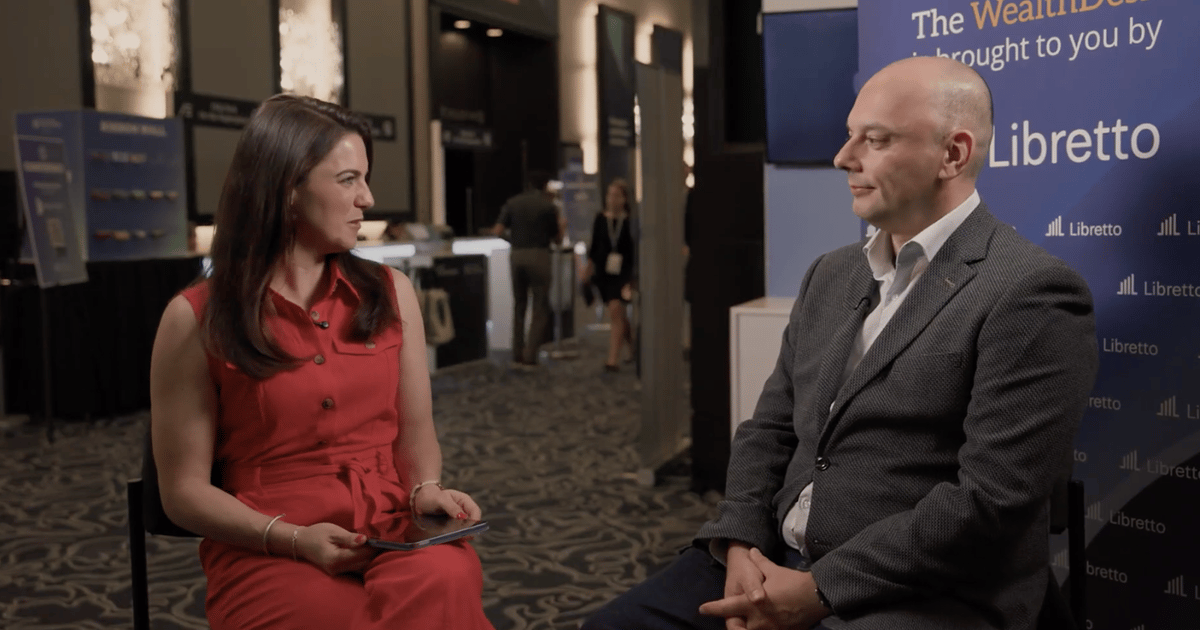
Shannon Rosic: Good vibes only, but what does that have to do in the context of wealth management? I’m joined by Jason Pereira of Woodgate Financial to talk about vibe coding. So Jason, welcome.
Jason Pereira: Thank you.
Shannon Rosic: So let’s dive into this a little bit because this is a newer concept, I would say, for the wealth management space and advisors who are very entrenched in the tech side of things like yourself have really started playing a lot with vibe coding. So talk to me about the landscape there a little bit and why this is something that advisors should potentially be focused on.
Jason Pereira: Yeah, so I’ll say, you know, don’t feel like this is, this is new to you. Don’t feel afraid of it because frankly, I’d say up until October, November, it wasn’t even good enough for us to play with, right? So vibe coding is basically the real term for it is agentic engineering. It’s basically using an AI agent to build software for you and it can literally be something that is a simple command to say, I need you to do X, build a calculator that calculates mortgages or whatever else it is, and basically the AI agent will go to work and build the code for you and build the app.
Shannon Rosic: So, let’s take a step back then because obviously a lot of advisors, their, their brains are spinning still because there is so much to choose from now and now all of a sudden we’re telling them they need to learn prompting and vibe coding if they want. So, where can they start? Because obviously this all starts around education, but at the very base level, where can folks get started?
Jason Pereira: Yes, so I’ll give you kind of a succession, right? So you can probably start an AI tool you’re using today, right? If you’re in chat GPT or cloud or Google Gemini, you could literally go in, maybe not co-pilot, but we’ll see, got to take a shot at Microsoft when I can, you can go in and just experiment and like the example I gave you. I need a mortgage calculator. I need a calculator for this. I need something like that. And if you do that, you will see that it will likely just start coding it right in front of you and open up a preview pane next to you within a couple of minutes, right? So you can literally use this in your normal tool.
Now, that’s not where you’re gonna build something larger, right? You can move on to something more user friendly like something called lovable or replit, which I’ve used before, they’re very approachable, uh, and then when you hopefully get your feet under you, you can move on to clog code or to or to anti-gravity or a bunch of things, but there’s lots of tools out there.
But I think the bigger thing is just realize that the key value proposition here is if you ever said I wish I had this in my business, no one seems to make it, it doesn’t seem like that big a deal, maybe it is, maybe it’s not. If you can conceive of what it is you need and know what you need as both an input and an output, you can tell an AI to build it and it can actually build the software and even tell you how to host it and all of it.
Shannon Rosic: I love that kind of repositioning of it like think about what your business needs and you can actually execute on it without having necessarily a ton of deep knowledge or needing to be a coder. So I think this could potentially be a game changer for a lot of folks that are interested in going down that path. And I, I think, you know, places like T3, what was so interesting about the AI university days, that was meant to really be a more immersive, like touch it, feel it, see what AI is actually doing. So I appreciate that we are now dedicating the time and headspace for advisors to be able to actually learn about it. But even beyond AI because obviously that’s what’s dominating the headlines now. What other trends or shifts are kind of top of mind for you right now?
Jason Pereira: I think that there’s lots of trends and shifts that are happening that are basically AI is the catalyst for them, right? So a number of things I’m seeing, you know, large enterprises pushing back on some of their vendors saying, you know what, we don’t want your software anymore, but we really want your data feed, right? We want to build the experience ourselves, and that used to be a much bigger build before coding and AI and now that’s a thing.
And then in addition to that, you know, that’s part of a larger trend altogether where they’re moving away from as much buying and partnering that they did before and back to the building that you used to see back in the day. Now I think that’s being largely over swinging in these companies thinking they can build everything. They’re gonna waste a bunch of time, build a couple of things, but then decide maybe we shouldn’t replace that outright. So I think we’re going to see some upheaval and back and forth before this sells, but yeah, you’re gonna see, I think the exciting thing about this is that now it’s completely viable to build a console, a dashboard, a use case for a specific role within a company down to an individual, right?
If you’re doing something not overly complex, I can literally build a console just for my, which is just what my administrators need, right, versus before having to rely on a large enterprise with more generic software, right? So there anyone who wants to harness this and can think it through, can build tools for their own staff. Now don’t go crazy. You’re not building your building your own all in one or gonna commercialize this. That’s just not happening.
Shannon Rosic: Well, what, what I think is so interesting too is, is we actually even heard this, um, at a conference a few weeks ago, the Orion conference, is that, you know, advice is really being commoditized. So I’m just curious like what your thoughts are on that. Like almost they’re encouraging folks to actually even embrace it.
Jason Pereira: So define advice, right? I think this is what, you know, when I looked at what Natalie said about the devices being commoditized, it is, is embrace it, but like go the stuff that we used to do, all the stuff that we’ve always been doing in terms of like products and access to markets, even, even running a basic financial plan, all that stuff, all those workflows are gonna be button pushers and be faster over time, so yeah, embrace it because the fight against that torrent of change is a losing prospect.
I think your value proposition from 20 years ago is valid now. It’s not. Today’s value proposition is not valid in 20 years. So what really the key is, is that, and I say this all the time, this has always been pushing us in the same direction, closer and closer to the human. So define your ideal client profile. Define the niche, the person, the type of person you can be of most value to be the most valuable you can to them through services that expand well beyond what you’re doing now, and that is the future of where this industry is headed.
Shannon Rosic: And just last question, coming from the advisor perspective, um, obviously you, you have the joy, I would say, and I always tap you for knowledge because you sit on both sides of the aisle being immersed in the tech but also still being advisor. What advice do you have for folks right now that are, you know, maybe not entrenched in it as you are? What’s noise right now and what is actually viable?
Jason Pereira: Look, I, I, I really feel for them because I feel like it’s overwhelming, right? Like the change was always overwhelming before and it’s just getting faster and faster and faster, and I see people sit down with companies and say, oh my God, that platform looked incredible, but I meet with these guys next week, and oh my God, they’re even better, like, and everybody’s afraid right now to make a choice, right?
The reality is, is that I’ll go back to my old saying on this. Technology is not a strategy. Technology is there to embrace, to, to enable your strategy. So go back to what it is you’re trying to deliver, what value you’re trying to deliver to the human being that you’re dealing with. Figure out everything you wanna deliver them, and then when you meet with someone that basically can enable that with the technology that you that with their technology, you adopt it, right? And if someone else is better at something, it doesn’t matter because it’s a better fit for your practice, that’s what matters, right?
So start there. But the most important thing is you can’t keep your head in the sand on this. You have to unfortunately wade into the deep end of trying to at least get your head around what’s possible. Once you know what’s possible, you know it could support your business, and then you can look for the vendors if necessary.
Shannon Rosic: I think that’s great advice. Well, Jason, it’s always a pleasure getting to talk to you. Thank you so much for your time.
Jason Pereira: Pleasure.
Shannon Rosic: For wealth management, I’m Shannon Rosic.