
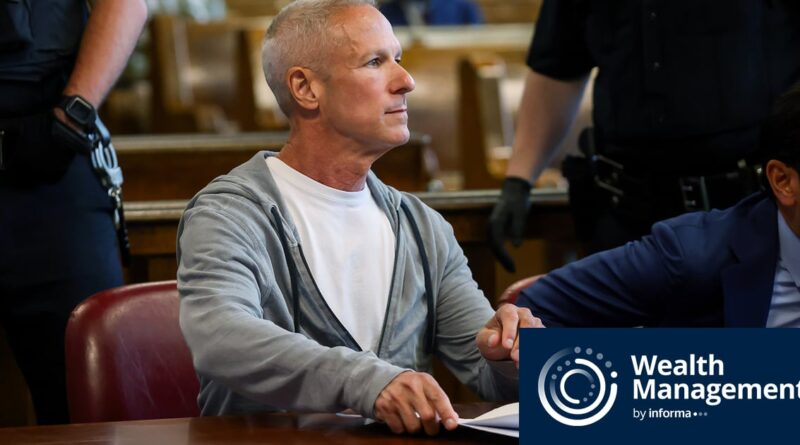
Former CFA Institute CMO Sentenced for Embezzlement
A former top executive with the CFA Institute will spend up to nine years in prison after pleading guilty to defrauding the association.
Michael Collins first joined the CFA Institute in 2016, eventually becoming its chief marketing officer before leaving in 2022. But he’s now heading to prison after he pleaded guilty to grand larceny in April.
According to Manhattan District Attorney Alvin L. Bragg Jr., Collins embezzled nearly $5 million from CFA Institute and about $1 million from an education technology company he worked for (Bloomberg reported the other company was Boundless Learning, a subsidiary of the education publishing company Pearson Plc).
“Michael Collins exploited these companies for his own personal gain,” Bragg said at the time of the guilty plea. “He took millions for himself and made extravagant purchases, including luxury items and international travel.”
According to the District Attorney’s office, Collins used the same scheme at both companies by creating and controlling two fake marketing consulting companies, Quattro Quadrat and Regiondrivers.
Collins incorporated both companies and set up multiple email addresses, phone numbers, websites and bank accounts to make them appear legitimate. With the front companies in place, Collins “hired” Quattro Quadrati and Regiondrivers as marketing vendors and consultants, while submitting invoices for the work the companies (fictitiously) performed.
According to the Bragg’s office, Collins created fake presidents and employees for the two companies and registered email accounts under those names, going so far as to correspond with these invented employees (he would then forward these “conversations” to employees at CFA Institute).
In total, he submitted about 144 fake invoices to the CFA Institute (as well as five to Pearson). During the scheme, Collins asked the service he used to incorporate the fake companies if his identity could be “shielded or masked” from anyone looking into the firms.
After transferring the funds from the fake companies’ bank accounts to his personal accounts, Collins used the money for executive club memberships, luxury brands, fine dining and travel (including 150 flight tickets). He also used it to pay for a $150,000 engagement ring, bought from a jewelry store using funds directly from a Quattro Quadrati account.
Collins’ fraud wasn’t detected before he left the CFA Institute for Pearson, but he was eventually arrested and, this week, sentenced to 3 to 9 years in prison by a New York State Supreme Court judge.
In a statement to Wealth Management, a CFA Institute spokesperson said the association had “assisted” the D.A.’s office in the investigation, and thanked them for “pursuing justice.”
“In the years preceding and since the incident, we have significantly strengthened our internal controls to protect our organization against potential future misconduct,” they said.
The Institute also submitted a victim statement read by prosecutors at the sentencing, claiming that Collins’ fraud had damaged its reputation, and that “morale has suffered” across the organization in the wake of the charges. According to the statement, Collins’ conduct had “significantly damaged” the institute’s reputation.
“Our dues-paying members’ use of the CFA designation is a point of pride for them and signals their professional status to employers, peers, and clients,” the statement read. “Therefore, the impact of Mr. Collins’ actions goes far beyond the damage to our organization; it has repercussions for the individual reputations of our 200,000-plus members. These members are justifiably upset by Mr. Collins’ theft, and we have much work to do to repair that damage and regain their trust.”
After the guilty plea in April, CFA Institute Chair of the Board of Governors Marshall Bailey called Collins’ crimes “a regrettable episode” in the organization’s history in a letter to members.
Bailey claimed the group was “confident” it would recover the losses, and after an independent organization felt sure that no other employees conspired with Collins.
Additionally, Bailey claimed the organization had already made improvements to its risk controls before Collins’ fraud was uncovered, including “enhanced oversight of expenses, heightened conflict disclosures, procurement gatekeeping and reviews, and a more rigorous contract approval process.”
The CFA Institute administers the Chartered Financial Analyst designation. In 2023, the organization added a wealth management specialization to the designation.
Additionally, in late 2024, the Institute announced price increases, eliminating the one-time $350 enrollment fee for the CFA Program but boosting the standard exam prices for Levels I, II and III by $200 each.
According to the Institute, the increases were “partially” due to the CFA program enhancements from 2023 (including the specialized pathways for private markets and private wealth), as well as to “inflation and other economic conditions.”
The price increases went into effect this past February.