
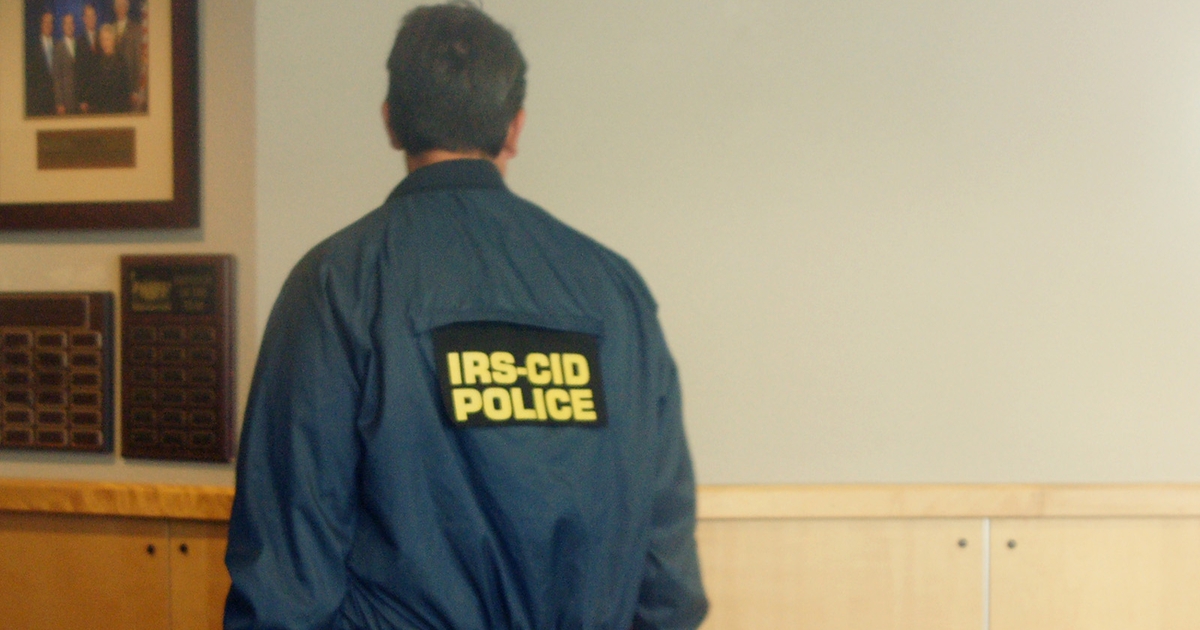
IRS Targets Tax-Exempt Groups in Criminal Probe
Major changes are underway at the Internal Revenue Service that could lead to an increase in criminal tax investigations into tax-exempt organizations. According to a recent article in The Wall Street Journal, Gary Shapley, advisor to Treasury Secretary Scott Bessent, is leading an overhaul of the IRS-Criminal Investigation unit that would enable precisely that. Shapley, who briefly served as the acting IRS commissioner, has reportedly compiled a list of tax-exempt organizations for the IRS to examine. Tax-exempt organizations should carefully monitor this overhaul and prepare for potential enhanced IRS scrutiny.
Selecting specific areas on which to focus its criminal enforcement efforts is nothing new for IRS-CI. The investigation and successful prosecution of tax shelters, Swiss bank secrecy, cryptocurrency evasion and conservation easement overvaluations exemplify what charitable organizations (and those involved with them) may expect in the foreseeable future. Following the playbook utilized in these probes, IRS special agents, working with federal prosecutors, may soon begin interviewing taxpayers making or receiving tax-deductible donations or grants to determine if the taxpayers were aware of any actual, or “off the record” representations about an organization’s misuse of funds. In the past, the government has offered taxpayers non-prosecution agreements in exchange for truthful cooperation in probes. IRS special agents also use investigatory tools, such as standard summonses, grand jury subpoenas, search warrants and John Doe summonses, to obtain evidence. (In contrast to a typical summons, where the IRS seeks information about a specific, identified taxpayer, a John Doe summons allows the IRS to obtain the names and records of taxpayers within a certain group whose identities aren’t yet known. Internal Revenue Code Section 7609 (c)(3) & (f)).
Recent investigations involving digital assets, combined with effective work over the past several years with international law enforcement, in collaboration with the Joint Chiefs of Global Tax Enforcement, have significantly enhanced the IRS-CI’s ability to efficiently analyze electronically stored and foreign evidence. Accordingly, charitable organizations should expect that information stored electronically and offshore will be available to the IRS-CI. Foreign organizations aren’t immune to prosecution, as the U.S. Department of Justice—including its Tax Section, which recently folded into the Criminal Division—hasn’t hesitated to prosecute offshore entities and their executives. As more than 80 Swiss banks have discovered, facilitating U.S. taxpayers’ tax evasion may provide a basis for jurisdiction.
Tax-Exempt Organizations
In general, tax-exempt organizations must operate primarily to benefit their charitable classes. While legislative lobbying and political campaign intervention may well benefit the charitable class, Congress has limited such activity as a condition of tax-exempt status. A tax-exempt organization that engages in certain types of political speech, substantial lobbying, illegal activity or activity that’s contrary to public policy may lose its tax-exempt status. (See IRC Section 501(c)(3); Bob Jones Univ. v. United States, 461 U.S. 574 (1983); Revenue Ruling 75-384, (breaches of public order incompatible with tax exemption)).
While most charities, educational institutions and other nonprofits aren’t generally engaged in such activity, the IRS may take a more expansive view of what constitutes impermissible actions. For example, IRS officials have argued that certain types of pro-Palestinian protests on college and university campuses constitute unlawful support for terrorism and should result in those colleges and universities losing their tax-exempt status.
An IRS civil revenue agent or revenue officer’s determination that an organization, or individuals associated with the organization, knowingly used donations for which taxpayers received a tax deduction to operate beyond the scope of its charitable purpose may well lead to a referral to IRS-CI for purposes of a criminal investigation. A referral to IRS-CI may also originate from other sources, such as whistleblowers. The Wall Street Journal article indicates that IRS-CI presently has a list of such organizations.
Effect on Clients
Clients should ensure that their grantees aren’t authorized to use contributed funds to engage in activities that include substantial lobbying, political campaign intervention, illegal activity or activities that are contrary to law. Grantors should operate under the assumption that the IRS has, or may obtain, information that will reveal any transactions relating to such donations and the ultimate use of their funds, as well as any communication between them and the individuals managing the funds. Contributions to a fiscal sponsor, donor-advised fund or other intermediary organization may give rise to criminal liability if the funds are earmarked to a secondary beneficiary for an improper use. Those who have a concern regarding any aspect of a transaction should determine their best course of action, which may include self-reporting the actual or potential noncompliance.
Effect on Charitable Organizations
To avoid or reduce potential exposure, nonprofits should develop or update compliance programs to ensure that their funds are being used in strict accordance with their nonprofit purpose and aren’t diverted to impermissible purposes. Organizations should also maintain policies and procedures, as well as internal controls, to prevent employees from using funds in a manner that may expose the organization to criminal investigation. If questionable activity is suspected or disclosed, the nonprofit should undertake a range of measures, including remediation, and consider whether self-reporting is beneficial. The risk of detection is high, and this IRS-CI enforcement effort is expected to expand in the near future.
Finally, this assessment should include offshore operations, as the DOJ has repeatedly demonstrated that its reach extends beyond U.S. borders. Contacts with donors should also be scrutinized, as IRS criminal investigations will likely begin with interviews of taxpayers who benefit from the donation to determine if any solicitations were improper. Organizations responding to inquiries from IRS-CI special agents should seek competent criminal tax defense counsel.
Address Compliance Issues Now
The IRS and DOJ have made clear their willingness to prosecute organizations and individuals whose unlawful activities are discovered during an industry probe. Therefore, institutions and individuals associated with providing tax benefits for charitable contributions should evaluate their current operations and, if necessary, act now to minimize their potential exposure and risk of being swept up into a potential wave of investigations.
Now more than ever, nonprofits should take steps to comply with applicable laws and regulations. Based on the Wall Street Journal article, an enforcement probe may be on the horizon, and the consequences of noncompliance could be severe. Additionally, the breadth of IRS investigations will expand as agents are trained to target nonprofit organizations efficiently and effectively.
The taxman is coming, and now’s the time for philanthropists, foundations, charitable intermediaries and grantees to address any compliance issues they may have.
Associate Sinéad Brennan-Gatica also contributed to this alert.