
Advisors With Middle East Clients Focus on Safety, Cash
As the U.S. and Israel began their attack on Iran over the weekend, financial advisors started preparing communications to send to their clients in the Middle East. But the messages didn’t necessarily lead with financial matters.
“All focus right now is on safety and security,” said Peter Sengelmann, director of international wealth management and investment at Creative Planning, which has about 100 clients in the Middle East across eight countries. “Specific to our client base, that is top of mind.”
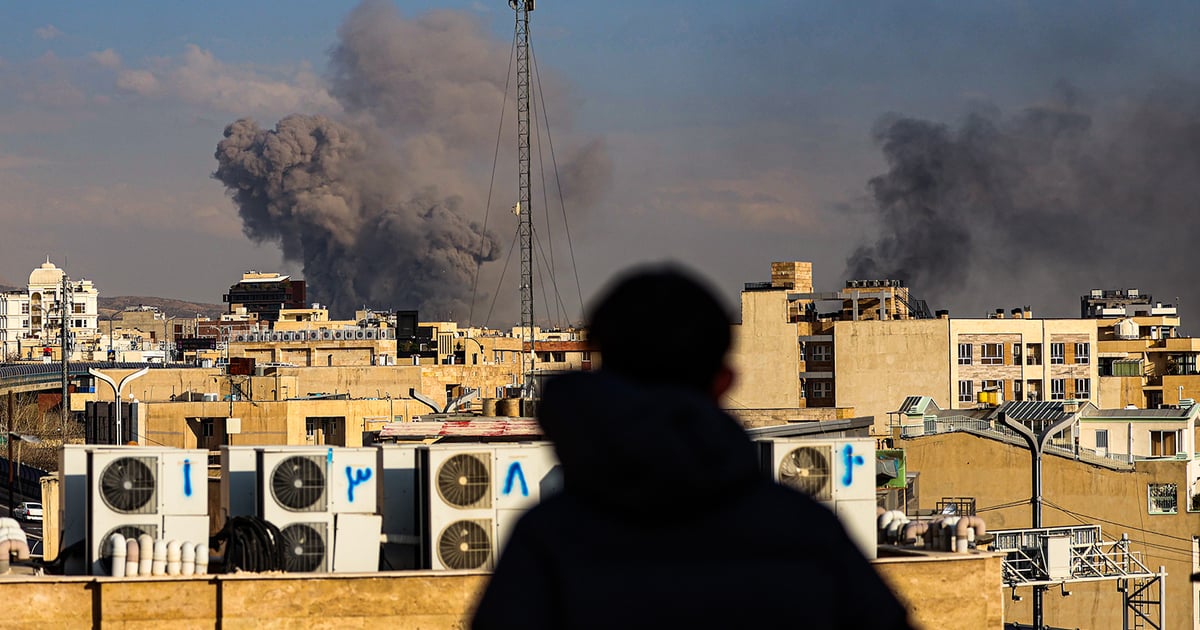
Sengelmann said that for clients in the Middle East, the level of concern varies depending on where they are, with some staying put and others looking to leave, especially amid Iran’s wide-ranging response. Iran has attacked countries throughout the region with missiles and drones. That’s led to mass disruptions, limited travel and heightened uneasiness about the potential for further attacks.
“It comes down to the individual,” Sengelmann said. “Some are saying, ‘I’m fine, I’m staying put.’ … Some are asking to make capital available. Another individual is getting on an emergency flight back to the U.S.”
Beyond client safety, the war in the Middle East is disrupting markets and spiking commodity prices worldwide. Financial services firms are analyzing the situation and issuing investment research to reflect the latest developments, although many had positioned portfolios for heightened volatility well before the attack on Iran.
Tash Elwyn, private client group president for Raymond James, told Wealth Management in an interview on Wednesday that, by Sunday evening, the firm was already putting out “intellectual capital from a research standpoint.”
“Our Washington policy strategists were already putting out thought capital as well, and that was even before advisors arrived in their office on Monday morning,” he said. “Advisors are demonstrating great confidence in their client relationships right now, and clients are not showing high levels of anxiety.”
For advisors working with clients in the region, however, it’s also a very personal moment where people are seeking guidance or just a gut check, according to Tom Pewtress, global head of proposition at Skybound Wealth Management, a multi-jurisdictional wealth manager with offices in Dubai and Abu Dhabi, with about 50% of its clients in the Middle East.
“There are people in the region itself that are being directly impacted by the actual ongoings of the war, and so we’ve done a lot of direct outreach to those clientele,” Pewtress said. “We’re saying, ‘If you need anything, if we can help at all, if you’re wondering what you should be doing right now from a work, a location perspective, a moving money perspective, we’re here.’”
Pewtress said he has heard from clients about long lines at local supermarkets and ATM runs as people scramble to secure food and cash. Others were concerned about banking systems being down after Amazon Web Services facilities in the UAE were hit by strikes. In these cases, Pewtress said the firm treats clients as it always does, like a “personal trainer,” keeping them focused on their goals and long-term plans.
“It’s like any period of transition or uncertainty when you are living as an expat,” he said.
With one self-employed client, Pewtress agreed with her decision to delay making her usual annual retirement savings contribution to keep a little extra cash on hand as the war plays out.
“In these cases, we say, ‘Let’s take a breather. Let’s see what this looks like over the next two, three, four weeks,'” he said.
Financial advice can often be a regional profession due to both the need to be close to clients and the licensing and regulatory differences between countries. But advisors in the U.S. must face another reality: more Americans are moving abroad and may be seeking guidance from their advisors or through referrals.
According to the Brookings Institution, the U.S. recorded net negative migration of between 10,000 and 295,000 in 2025, with the final numbers yet to be counted. Either way, that will be the first time in at least 50 years that net migration will have been negative, and the think tank estimates that figure is likely to increase in 2026.
For Pewtress and Skybound Wealth, when a financial advisor isn’t equipped to help a client move overseas, it can turn into an opportunity for their firm. He mentioned a recent call in which someone told their U.S.-based national brokerage that they were moving to Sweden, and the firm said it couldn’t keep them as a client.
“That’s a daily occurrence for us, and really that’s kind of what we built our business out of,” Pewtress said.
The financial advisor said some of the large wirehouses and advisory firms in the U.S. can’t talk to clients “holistically about assets overseas,” partly “because of their compliance framework, their knowledge, their governance won’t allow them to do that.”
Sengelmann of Creative Planning also pointed to the firm’s focus on building client portfolios around risk and contingency planning, no matter the immediate environment.
“We plan for contingencies in the work that we do,” he said. “This situation can result in the stock market falling, but the key is that people are not pulling assets out or running and panicking as some did in 2020 or 2008. We always have some level of defense in portfolios that makes access to capital pretty easy.”