
In a Sea of AI Tools, Advisors Mostly Dipping Toes
The entrance of artificial intelligence-driven tools into the wealth management sector has been coming fast and furious in the past year. If any further evidence is needed, just look to Future Proof Citywide in Miami this week, where organizers said they had 86 firms vying for eight main stage demo spots.
Those applicants ranged from firms seeking to disrupt wealthtech across CRMs, tax planning, compliance, investing, marketing, and, of course, agentic AI assistants designed to surface client needs before an advisor is even aware of them.
“I wouldn’t call us first movers, but we are here poking around and testing things,” said Thomas Brady, founder and CEO of Brady Family Wealth, an RIA based in St. Louis.
Brady expressed the sentiment of other advisors, however, by taking a cautious approach to adding AI tools and avoiding “chasing shiny objects” in a crowded, evolving market.
“The question is how do you apply these tools?” he said. “You can either go out and find somebody, or you can let the vendors, like our CRM company, figure it out and let them incorporate their AI, which is already in our tech stack, so that you don’t have to do it. That is not what we do; that is not our core competency.”
Andrew Brady, Thomas’s son and the firm’s president and CIO, agreed, noting that he is interested in exploring AI tools to advance investment research.
“I run our client portfolios, so being able to use AI to research more effectively was very interesting,” Andrew Brady said.
Beyond specific tools, there was certainly an acknowledgement that AI is influencing, and will continue to influence, how advisors operate both internally and with clients. On Monday, Hightower announced it had signed an enterprise agreement with TaxStatus to use its new integration with wealth platform Advice.ai. The week before, Merit Financial Advisors announced a deal to use OneVest’s agentic wealth system, which automates middle-office operations and eliminates manual tasks.
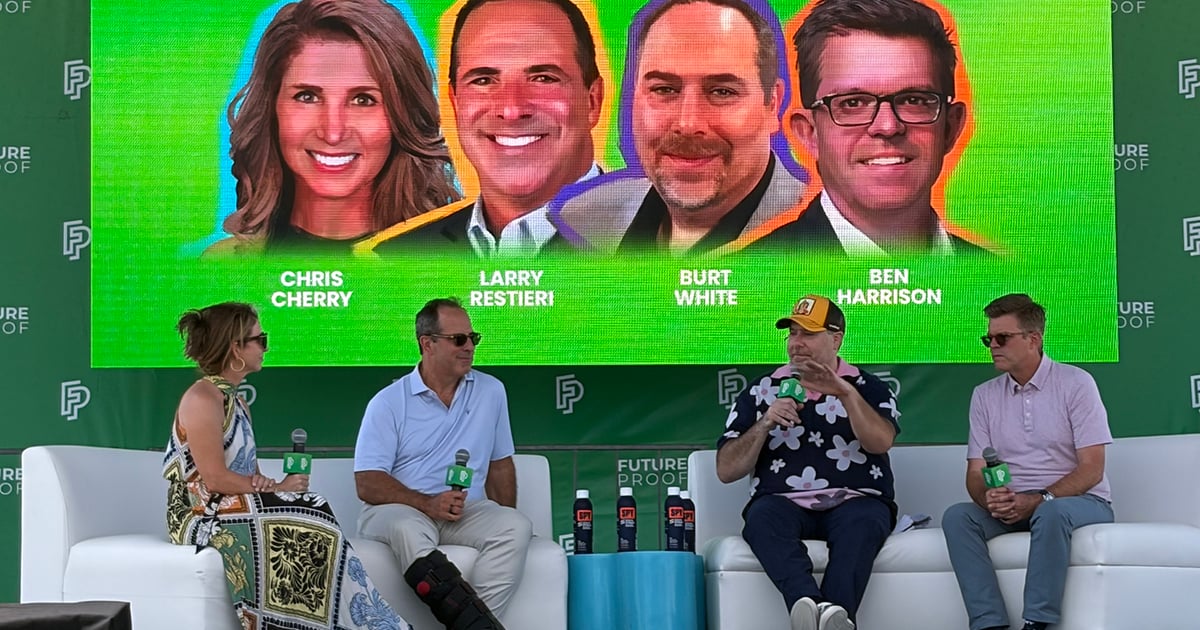
During a panel at Future Proof, Hightower CEO Larry Restieri noted the partnership with TaxStatus as an example of “productivity gains” that can come from AI-driven tools. But he stressed the continued importance of human interaction and advice for the foreseeable future.
“People will be able to be better, but I still think the core to the advisor-client relationship is the personal relationship,” Restieri said. “I think even in the next cycle that will differentiate the good advisor from the great advisor.”
He added that Hightower is in the “early days” of advancements such as agentic AI agents that can actively raise client issues for advisors, partly because the technology is developing so quickly.
“I’m not in a huge rush,” Restieri said. “The technology is advancing so fast that in two months or so I might meet some other startup—probably somebody here—and see something even better than what we were looking at two months ago. We want to be thoughtful about this, and I don’t want to be too disruptive of their business and how they are doing it.”
Carson Group CEO Burt White, who was also on the panel, agreed that while his firm was “taking the calls from the 86 firms” and listening to them, they were not in a rush to implement everything—advice he also gave to advisors in the audience.
“One of the things I’m fearful of is that advisors are going to go out and they’re going to onboard seven different platforms, and they’re going to try to piece it all together,” White said. “That’s not where the future is going. Where the future is going is one common platform that has all of your data, and you are the UI and the UX. You decide the path you create it, and you might create a different platform and experience for every one of your clients.”
Other RIAs at the conference noted compliance as an area that has caused them to pause AI tool adoption.
Joe Haupert, chief business officer at Credent Wealth Management, said his firm has considered AI tools that, while interesting, don’t pass muster with their compliance protocols.
“From our standpoint, from a compliance standpoint, we need to know what exposures or risks are being generated,” Haupert said. “People are not analyzing with all aspects in mind—they’re analyzing it for efficiency and ‘what does it do for me.’ They aren’t looking at it from a risk perspective, or what impact it might have on the business.”
Some technology-driven RIAs, in the meantime, are building their own AI-driven technology tools for their advisors.
David Weiner, the chief growth officer of technology-focused RIA Savvy Wealth, said on the sidelines of the conference that the “build instead of buy” mentality has been a recruiting tool for the firm, partly because the industry is currently focused on wealthtech and AI.
“Do you want to be choosing disparate tools for you to use and trying to connect them? Do you want to be at a firm that’s using someone else’s AI that is layered on top?” he said. “Or do you want the firm that is building it from the ground up at the center of everything we do, with you giving us feedback? When you position it like that, I think the idea that people are interested in technology already is really attractive.”
Gopal Subramaniam, chief data and AI officer at Focus Financial Partners, recommended a level-setting exercise for advisors to complete before they begin adding AI-driven tools.
“You need to first consider what problem you are trying to solve,” he said, sitting inside a large tent full of AI wealthtech startups. “Then you can look for technology to match that need.”