
OnePoint BFG CIO: Commodities Stocks Can Ease Oil Market Shocks
The past few days have been a wild ride for the global oil markets. After news emerged Sunday that Iran closed shipping lanes in the Strait of Hormuz for the first time in history, halting oil and gas transport, oil prices skyrocketed to $120 a barrel. More troubling than the prices has been the prospect of a long-lasting shortage in global oil supply, as well as in fertilizer, posing the risk of major shockwaves through the global economy. Since Sunday, oil prices have fluctuated wildly, driven by news of ships being attacked, Iran placing mines in the Strait, the International Energy Agency’s decision to release 400 million barrels of reserve oil and U.S. officials giving often conflicting statements on how long the war might last. (As of Wednesday morning, crude oil was trading at roughly $87 a barrel.)
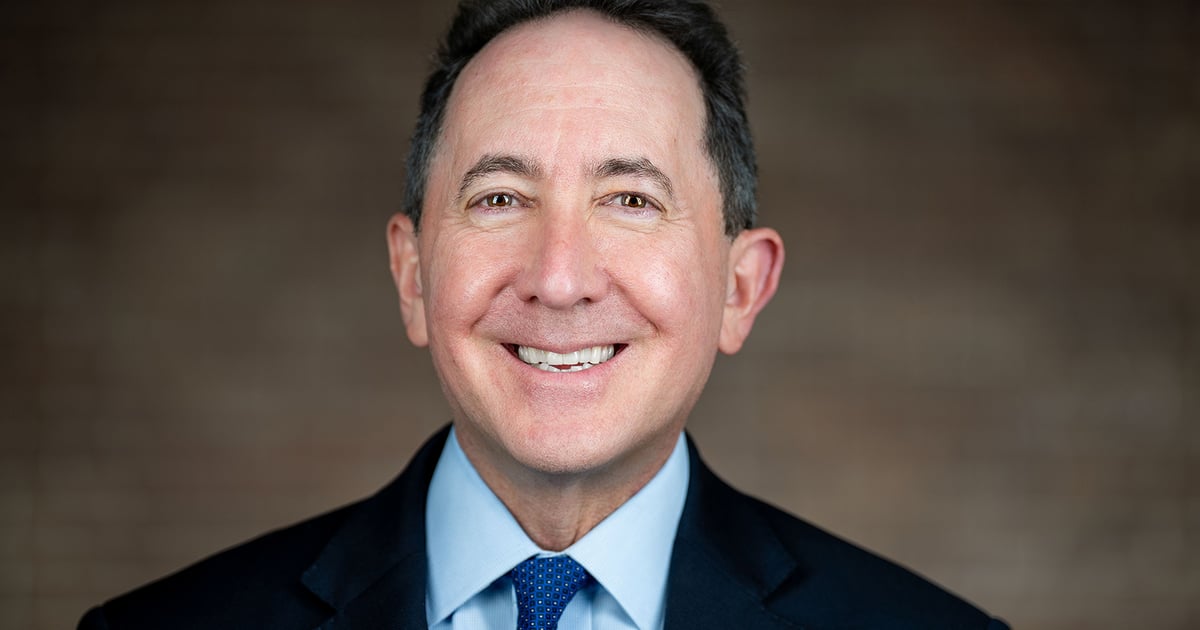
To get a sense of what the closure of the Strait of Hormuz might mean for investors, we spoke with Peter Boockvar, CIO of OnePoint BFG Wealth Partners, an independent RIA with over $12 billion in AUM. Boockvar has been bullish on oil and gas stocks long before the Trump administration began discussing military action in Iran, expecting only a marginal increase in oil supplies in the coming years.
This Q&A has been edited for length, style and clarity.
Wealth Management: What was your initial reaction when you saw what was happening on Sunday, both from the price perspective and from the supply perspective?
Peter Boockvar: The Strait of Hormuz has never really been closed. It’s always been this perpetual fear every time Iran was instigating in some way. But now it’s legitimate and for real. We are seeing the impact where if you net out the oil that’s getting pipelined in Saudi Arabia, you are still talking about almost 15 million barrels of oil that’s not flowing through the Strait.
But you also have 9% of the world’s aluminum smelters that are based in the Middle East that can’t get stuff out. You are talking about fertilizer that can’t get sent out, and sulfur and ammonia, which goes into making fertilizer. And natural gas, of course. So, it’s just a question right now of duration. Obviously, the longer this goes on, the worse it’s all going to get. Right now, at least the last couple of days, the market is betting with the decline in oil prices that any impact is going to be short-lived and we, of course, hope that to be the case. But every minute, every day, every week is a new thing right now, and we are sort of prisoners of the events that are being given to us.
WM: Is it safe to assume you have not made any changes to your allocations yet? Or have you made some tweaks?
PB: No, we’ve been bullish on long energy coming into the year, and this just reinforces our bullishness. I think the 2025 precious metal and industrial metal bull market is now widening out to energy and agriculture through fertilizer prices and also the disruption, which will impact the price of corn, soybeans and wheat. So, I think we are in a commodity bull market.
Even with a resolution and cessation in the attacks, I still think it will continue. We know that with the spat with China, critical minerals have become an important thing. It’s very key to have them. I would have to think that when this war is over, every country is going to either add to their strategic reserves of all different commodities, or if they don’t have one, they are going to create one. There is going to be an underlying bid on a variety of different commodities even when this war ends.
WM: What are a couple of your most likely scenarios for how this war and the closing of the Strait is going to play out? What will those scenarios mean for the oil markets, and might they impact people’s investment choices?
PB: The best scenarios are just the obvious—it’s something that ends as quickly as possible. How that’s going to be the case, I don’t know. It’s becoming more apparent, though, that the U.S. and Israel bombing them is not going to bring them to the table and is not going to settle this. There is obviously a risk that this gets dragged on, particularly after the appointment of the new supreme leader, who is the son of the old one. That tells me that the regime is digging in, and that means that this is going to take longer than feared.
Again, this is a question of duration, and the longer this goes on, the worse it’s going to get, the more shortages there are going to be, and the higher prices are going to go.
WM: How long will the Strait need to remain closed for there to be a significant shock to the global economy?
PB: I don’t know, I don’t have a number for you in terms of days. I just know that every day there are growing problems.
WM: What advice would you give other advisors right now? Is there any way to limit the damage from the volatility?
PB: Well, by owning commodities, you are sort of hedging yourself against the current situation. As I’ve mentioned, we are long on a bunch of these, so we had a little bit of a shock absorber to other parts of the portfolio and what is going on. And I don’t think it’s too late to be investing in commodities stocks, whether it’s energy, agriculture, industrial metals or precious metals.
WM: Is there anything else that you feel is important for advisors to keep an eye on with this situation?
PB: I think with any investor in markets time horizon is key. If someone had money in the market that they were going to use to pay for a kid’s wedding in the fall, it shouldn’t be in the stock market. If you have a long-term horizon, the world has been through scary times before, and we’ve somehow managed to get through them. I think that’s the high-level advice to give.
But at the same time, to me, the markets were showing some vulnerability even before this war started. The AI tech trade was showing signs of tiring out, which meant that other things started to do better than the tech trade. But a lot of people are very much crowded in that tech trade because it’s what worked so well for so long. So, the world was not a perfect place going into this.