
Raymond James Boosted Fiscal Q1 Recruiting Budget 22%
Raymond James Financial reported that it increased its recruiting and retention-related compensation by 22% in its fiscal first quarter ending Dec. 31, 2025, as it continued efforts to draw financial advisors to its employee and independent contractor channels.
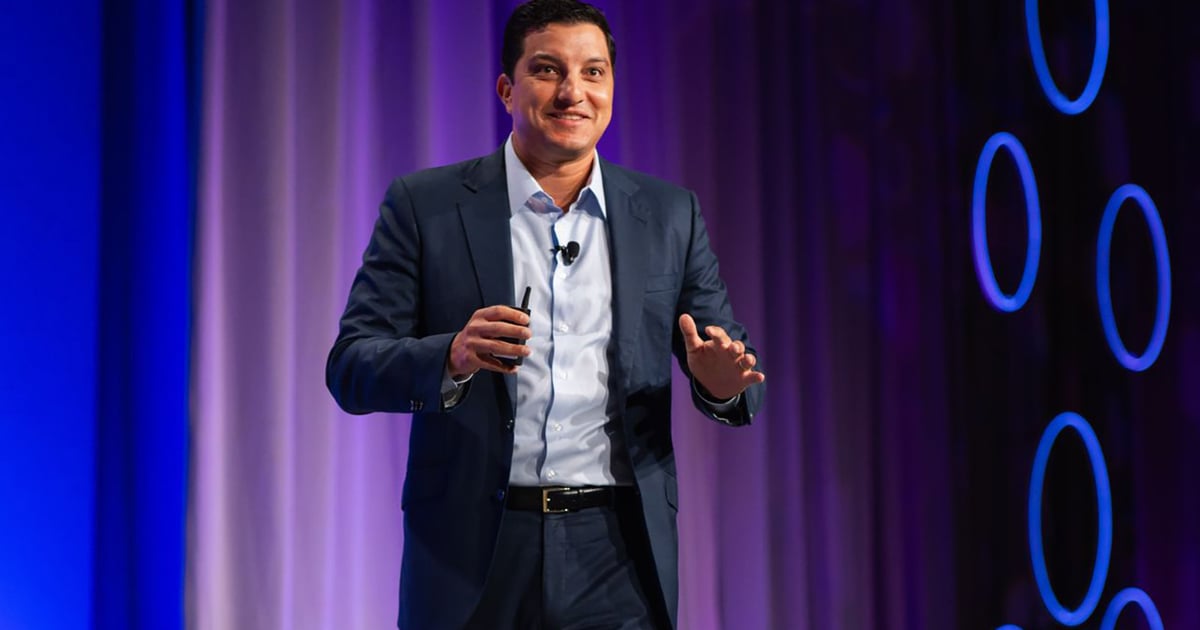
During an earnings call after markets closed on Wednesday, Raymond James Chief Executive Officer Paul Shoukry said the firm drew advisors with about $13 billion in clients’ assets from previous companies and trailing 12-month production of $96 million, in what he called a “strong result for a quarter that typically experiences a seasonal slowdown.”
The firm also reported net new asset annualized growth of 8% to $31 billion, the second-best results in the firm’s history.
“As I’ve been messaging the last few quarters here, the recruiting activity is robust,” Shoukry said. “It’s broad-based across our affiliation options, maybe more heavily tilted in the last six months on the independent contractor side of the business.”
Raymond James reported in October that it had reached a record 8,943 financial advisors as of the end of fiscal year 2025, up 2% from the prior year. It did not provide an updated advisor headcount through its fiscal first quarter.
On the call, Shoukry noted increased competition in the space, including from “private equity-backed roll-ups,” but cited Raymond James’ long-term stability versus PE-backed firms and its ongoing investment in technology and new initiatives.
This week, the firm announced a new proprietary artificial intelligence agent for advisors, called Rai.
Raymond James has also boosted its recruitment and advisor retention spend in recent quarters. For the first time—and as forecast by Shoukry in its Q4 earnings—the firm broke out recruiting- and retention-related compensation, reporting a 22% quarter-over-quarter increase to $107 million. In the fiscal fourth quarter, the firm boosted its spending 9% to $98 million compared to the year prior.
“These costs have increased as a direct result of our strong recruiting successes and reflect a component of the execution of our highest capital deployment priority of investing in organic growth,” Chief Financial Officer Butch Oorlog said on the call.
Oorlog said the firm had an average compensation ratio for advisors of 65.4% in the fiscal first quarter, excluding acquisition-related expenses. The firm’s total compensation expense was $2.45 billion.
More broadly, Raymond James reported record quarterly net revenue of $3.74 billion and record client assets under administration of $1.77 trillion.
The firm reported non-GAAP earnings per share of $2.79 during the quarter, beating analysts’ expectations by 5 cents, according to Seeking Alpha. Revenue was $3.74 billion during the quarter, up 6% over the prior year quarter and flat sequentially. Revenue missed expectations by $49.9 million.
Raymond James also reported that its capital markets results declined 21% year over year to net revenue of $380 million. Shoukry attributed the drop to lower M&A and advisory revenues, as well as lower debt underwriting and affordable housing investment revenues.
The firm’s asset management division, meanwhile, reported an 11% quarter-over-quarter increase in net revenue to $326 million, driven mostly by market appreciation and net inflows into fee-based accounts in the Private Client Group.
Shoukry highlighted the firm’s recently announced acquisition of Clark Capital Management Group, an asset management firm specializing in wealth-focused solutions with over $46 billion in total assets. He said the deal showed Raymond James’ “steadfast pursuit of acquisitions that are a strong cultural fit, a good strategic fit and valuations that generate attractive returns for our shareholders.”
When asked if there were specific market events driving recruitment success, Shoukry declined to comment directly on any firms or activities, noting that advisors were coming from a variety of channels.
According to Wolfe Research, in 2025, LPL recorded the most net advisor gains among firms at 601, excluding the Commonwealth acquisition. Raymond James came in second with 313 net new advisors, beating Charles Schwab (117) and Morgan Stanley (88).
Toward the end of the call, Shoukry was asked how he sees advisor movement in 2026 compared with the prior year. The CEO called recruiting a “marathon, not a sprint,” and said it was a “long-term process that requires a lot of investment.”
“When I hear other firms talk about, we think next quarter, we’re going to lean into recruiting and put a little bit more money into it—that’s not sustainable long-term recruiting,” he said.
During an earnings call earlier that day, Stifel CEO Ron Kruszweski said the firm was considering allocating more resources to recruiting after doubling the number of advisors added in 2025 compared to the prior year. Kruszewski said that while the firm’s recruiting offers had been “conservative,” they had been at the top of their range to remain competitive and outpace 2024 hires.